
Music can support recovery and ease suffering. That is what I mean by healing—not a promise to cure every illness.
By TINO | BLKOver the last fifteen years, I have felt the world change. We have more ways to connect and distract ourselves, yet I often hear people describe loneliness and pressure.
Being a DJ and a psychology graduate shapes how I listen. During nights out, people share grief, worries and things they have carried quietly for years. I treasure that trust. Sometimes drinking, drugs, sexual encounters or spending seem to offer temporary relief; I wonder about the pain beneath the behaviour, without assuming everyone’s story is the same.
What brings us here?
In a survey of 136 women over 40 attending electronic music events, around 63% said they went clubbing to escape life’s realities. A Belgian study of 1,345 regular EDM attendees also explored escaping daily life and coping with problems. Enjoyment, music and socialising were its strongest overall motivations.[1][2]
These findings do not mean most clubgoers are depressed. People can seek pleasure, connection and relief on the same night.
Beyond a feeling.
In a randomised study of 60 stroke patients, daily listening to favourite music supported greater improvements in verbal memory and focused attention than audiobooks or no listening material. Everyone also received standard care and rehabilitation.[3]
A 2025 Cochrane review found that music-based therapy probably slightly improves depressive symptoms in people with dementia. It did not establish that music slows dementia itself; lasting benefits remained uncertain.[4]
Hospitals already put music therapy into practice. Cleveland Clinic uses trained therapists across services including cancer care and intensive care. Great Ormond Street Hospital uses it to support children’s communication, rehabilitation and coping with treatment.[7][8]
Dedicated university centres—including Anglia Ruskin’s Cambridge Institute for Music Therapy Research and the University of Jyväskylä’s Centre of Excellence in Music, Mind, Body and Brain—study these connections.[9][10]
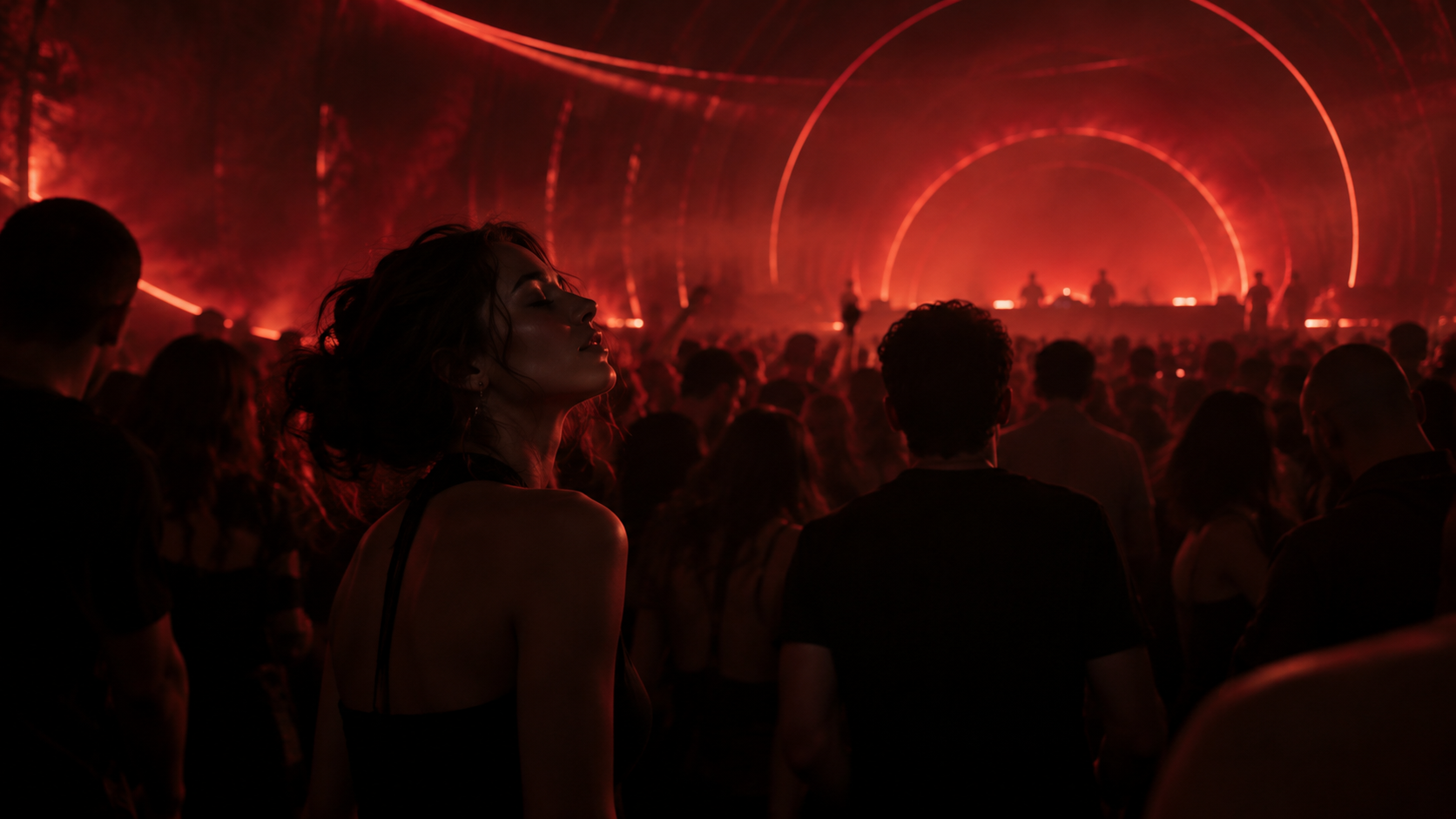
Why melodic techno.
Scientists have measured dopamine release during intensely pleasurable music listening, including around anticipation and peak emotion.[5] That interests me as an artist: the gradual arrival of a melody, the tension before a change, the release when it returns.
I remember studying classical music theory with Prof. Charles Zammit and playing the violin with my eyes closed. I still listen that way. It helps me notice details and understand my own response.
Melodic techno lets me work with rhythm, emotion and space. The research does not establish my sets as treatment. It deepens my respect for what music can mean to someone.
A separate clinical question.
MDMA-assisted psychotherapy has been studied for PTSD. A 2023 trial of 104 participants found greater symptom improvement with MDMA plus therapy than placebo plus the same therapy. Screened participants received supervised sessions and structured support; safety, lasting outcomes and difficulties keeping treatment allocation hidden require careful interpretation. This is not evidence that recreational MDMA use treats trauma.[6]
A responsibility in the room.
As a DJ and a leader in that room, I want to remember that everyone carries a story. Music cannot carry the whole weight of someone’s suffering; professional care, practical support and dependable relationships may also be needed.
What I can offer is care in the music, the atmosphere and the way I treat people. That is central to TINO and BLK: making room to move, feel and belong. And when someone trusts me with their story, I want them to know I was listening.